Japanese Egg Sandwich Recipe
Introduction
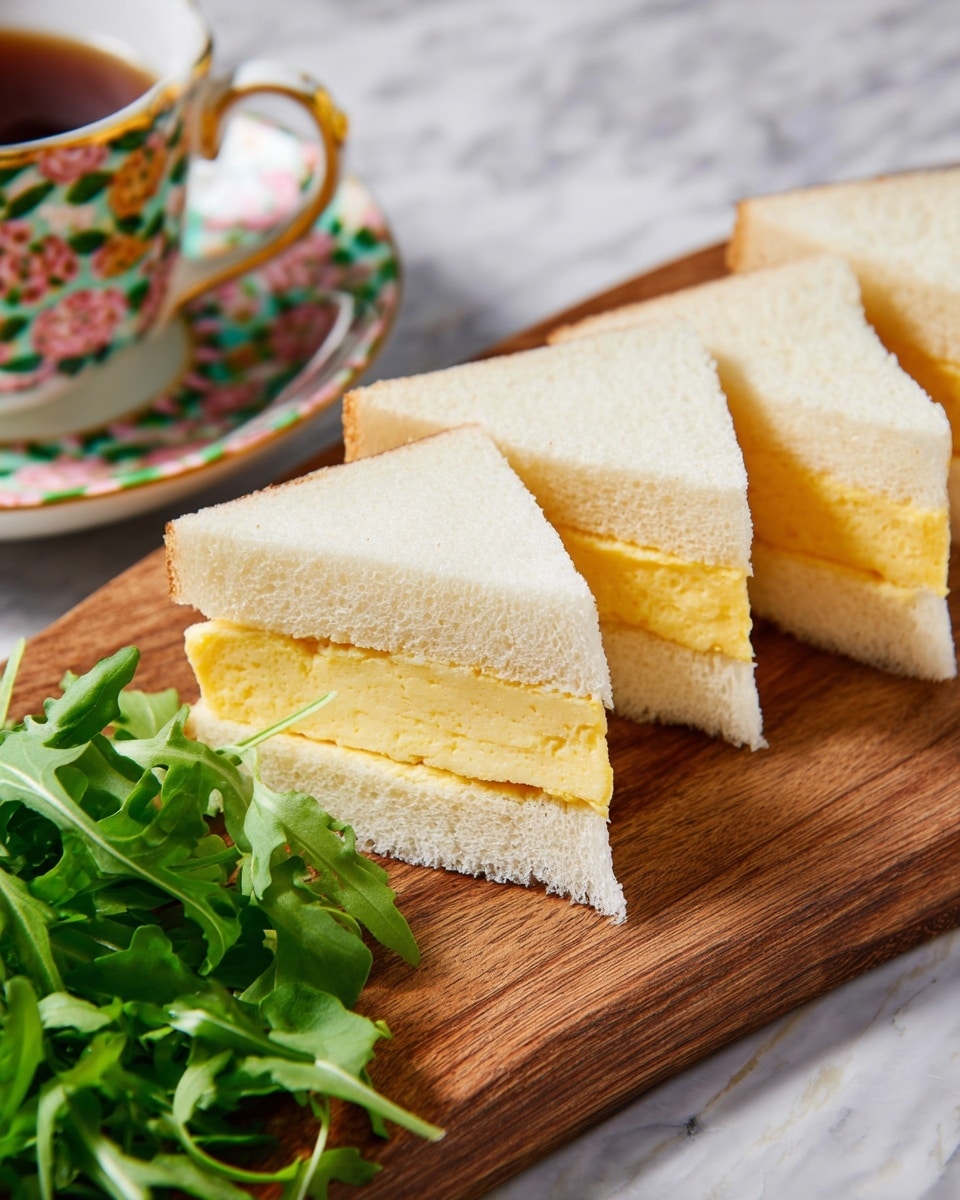
The Japanese Egg Sandwich, or Dashimaki Tamago Sando, is a delightful blend of fluffy, savory rolled omelette and a touch of sweet honey mustard spread. This sandwich makes for a comforting and unique meal that’s perfect for breakfast or lunch.
Ingredients
- 2 teaspoons potato starch
- 1/4 teaspoon salt
- 2/3 cup dashi stock
- 4 eggs
- 1 tablespoon mayonnaise
- 1 teaspoon Japanese hot mustard
- 1 teaspoon honey
- 1 teaspoon vegetable oil
- 2 slices thick-cut sandwich bread
Instructions
- Step 1: In a deep bowl, mix 2 teaspoons potato starch, 1/4 teaspoon salt, and 2/3 cup dashi stock. Whisk until the salt completely dissolves.
- Step 2: Crack 4 eggs into the bowl with the dashi mixture. Beat the eggs and dashi together until the mixture is uniform in color. For extra smoothness, strain through a fine-mesh sieve if needed.
- Step 3: Prepare the honey mustard sauce by combining 1 tablespoon mayonnaise, 1 teaspoon Japanese hot mustard, and 1 teaspoon honey in a small bowl. Mix until smooth.
- Step 4: Heat a non-stick frying pan over medium-low heat. Add 1 teaspoon vegetable oil and use a paper towel with chopsticks to spread a thin, even layer of oil. Wipe out any excess oil beads to keep the pan lightly greased.
- Step 5: Pour the egg mixture into the pan. Let it sit for a few seconds until the bottom layer begins to set.
- Step 6: Gently scramble the eggs, scraping cooked parts from the bottom and mixing with the uncooked top layer.
- Step 7: When the egg thickens and stops leveling itself, shake the pan to level the surface. Cover with a lid, reduce heat to the lowest setting, and steam for 2 minutes.
- Step 8: Remove the lid and fold the omelette from the top, folding the edges inward like an envelope.
- Step 9: With two spatulas, shape the egg into a rectangle matching the size of your bread. Cover again, turn off the heat, and steam for an additional minute until fully set.
- Step 10: Spread the honey mustard sauce generously on both slices of bread.
- Step 11: Place the cooked omelette on one slice of bread, then top with the other slice.
- Step 12: Press the sandwich gently with a flat-bottomed plate or tray to help the bread and egg conform together.
- Step 13: Serve as is or cut off the crusts for a neat presentation before slicing.
Tips & Variations
- Use thick-cut sandwich bread to better hold the fluffy omelette without getting soggy.
- If dashi stock is unavailable, a light vegetable or chicken broth can be a substitute, though it will change the flavor profile slightly.
- Adjust the honey mustard to taste, adding more honey for sweetness or mustard for spice.
- For a vegetarian version, use kombu dashi or mushroom broth instead of fish-based dashi.
Storage
Store any leftover egg sandwich wrapped tightly in plastic wrap or an airtight container in the refrigerator for up to 1 day. It’s best enjoyed fresh but can be reheated gently in a toaster oven to maintain texture. Avoid microwaving directly as it may make the bread soggy.
How to Serve
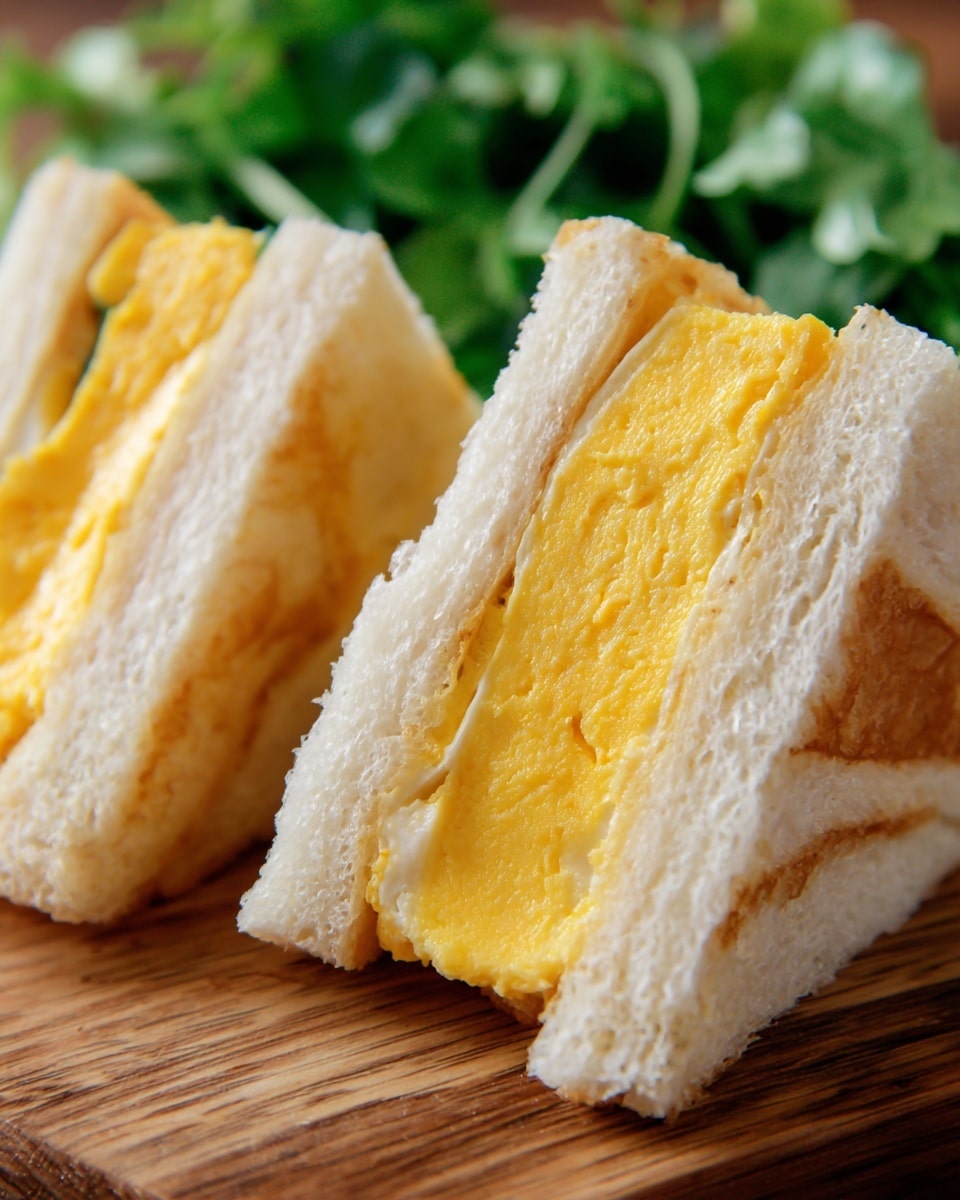
Serve this delicious recipe with your favorite sides.
FAQs
Can I use regular mustard instead of Japanese hot mustard?
Yes, you can substitute regular mustard, but the flavor will be less sharp and may lack the unique heat of Japanese hot mustard. Adjust quantities to suit your taste.
What is the purpose of adding potato starch to the egg mixture?
Potato starch helps create a softer, more custard-like texture in the omelette, making it tender and ideal for the sandwich.
PrintJapanese Egg Sandwich Recipe

This Japanese Egg Sandwich, also known as Dashimaki Tamago sandwich, features a soft, fluffy, and delicate omelette made with dashi stock, folded and steamed to perfection. It is paired with a honey mustard mayonnaise spread and served on thick-cut sandwich bread for a delicious and comforting meal with balanced savory and sweet flavors.
- Prep Time: 10 minutes
- Cook Time: 12 minutes
- Total Time: 22 minutes
- Yield: 1 sandwich 1x
- Category: Sandwich
- Method: Stovetop
- Cuisine: Japanese
- Diet: Halal
Ingredients
For the Tamagoyaki (Japanese Rolled Omelette)
- 2 teaspoons potato starch
- 1/4 teaspoon salt
- 2/3 cup dashi stock
- 4 eggs
- 1 teaspoon vegetable oil
For the Honey Mustard Spread
- 1 tablespoon mayonnaise
- 1 teaspoon Japanese hot mustard
- 1 teaspoon honey
For the Sandwich
- 2 slices sandwich bread (thick cut)
Instructions
- Mix starch, salt and dashi: In a deep bowl, combine 2 teaspoons potato starch and 1/4 teaspoon salt. Pour in 2/3 cup dashi stock and whisk until the salt and starch are fully dissolved.
- Beat eggs and dashi: Crack 4 eggs into the dashi mixture and beat until uniform in color. Optionally strain through a fine mesh sieve to remove chalazae or any unincorporated egg whites for a smoother texture.
- Make honey mustard sauce: In a small bowl, mix 1 tablespoon mayonnaise, 1 teaspoon Japanese hot mustard, and 1 teaspoon honey until completely combined to create a smooth spread.
- Heat and oil pan: Warm a non-stick frying pan over medium-low heat. Add 1 teaspoon vegetable oil, spread a thin, even layer using a paper towel and chopsticks, then wipe away excess oil to prevent pooling.
- Add egg to pan: Pour the egg mixture into the pan and let it sit for a few seconds until the bottom layer starts to set.
- Scramble eggs: Begin gently scraping the cooked egg from the bottom and mixing it with the uncooked egg on top, working evenly around the pan to combine the layers.
- Cover and steam: When the egg thickens and does not level itself immediately, shake the pan to smooth the surface, cover with a lid, and reduce heat to the lowest setting. Steam for 2 minutes to cook through gently.
- Shape tamagoyaki: Remove the lid and fold the egg from the edges towards the center like an envelope, folding it over itself to build layers and shape it into a compact rectangle.
- Cover and steam: Use two spatulas to press and shape the folded omelette into a rectangle that matches the size of the bread. Cover again, turn off heat, and let it steam for an additional minute until fully set.
- Honey mustard on bread: Spread a generous layer of the honey mustard sauce evenly over two slices of sandwich bread.
- Assemble sandwich: Place the cooked tamagoyaki on one slice of bread, then top it with the second slice. Place a flat-bottomed plate or tray atop the sandwich and apply light pressure to help the bread and omelette conform together.
- Cut sandwich: Optionally, remove crusts for a cleaner presentation, then slice the sandwich into desired portions to serve.
Notes
- Removing the chalazae (the stringy part inside eggs) is optional but improves the texture of the tamagoyaki.
- Using thick-cut sandwich bread enhances the sandwich’s texture and stands up better to the moist egg filling.
- Adjust the sweetness or spiciness of the honey mustard spread to taste by varying honey or mustard quantities.
- Pressing the sandwich lightly helps the flavors meld and makes it easier to eat.
- Serving the sandwich warm or at room temperature is best for flavor and texture.
Keywords: Japanese egg sandwich, Dashimaki tamago sandwich, tamagoyaki sandwich, honey mustard egg sandwich, Japanese breakfast sandwich